The Architecture of Lightness: Napoli Afragola, Zaha Hadid, and the Art of Neapolitan Tailoring
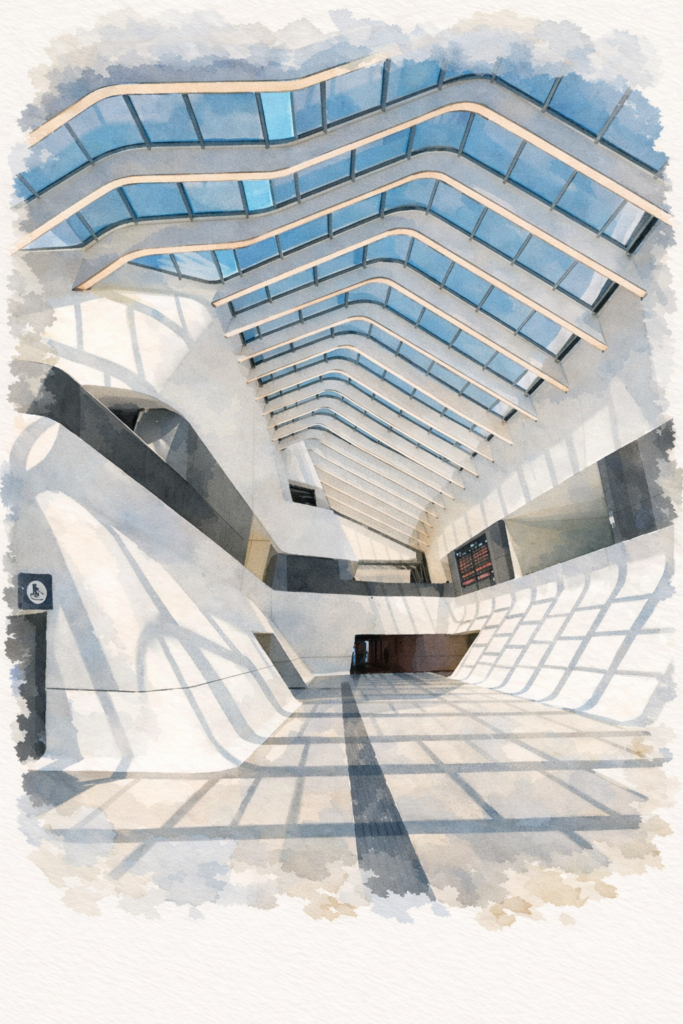
A short drive from the workshops of many of the artisans we partner with stands one of Southern Italy’s most remarkable modern landmarks: Napoli Afragola Station.
Designed by the late Zaha Hadid, one of the most influential architects of the modern era, the station rises above the railway lines like a sculptural bridge of light, movement, and purpose. Its flowing form has become an icon of contemporary Italian design, connecting communities across Campania while serving as a gateway to Southern Italy.
For us at Maxwell Studio, however, Napoli Afragola is more than a transportation hub. It is a daily reminder of the artisans’ core values who create many of the garments we offer: refinement, precision, innovation, and an unwavering commitment to lightness.
Hadid’s vision rejected unnecessary complexity. Instead, she created a structure that feels both powerful and effortless. Natural light floods the station through expansive glazing. The sweeping framework appears almost weightless despite its monumental scale. Every line serves a purpose. Every curve guides movement. The result is architecture that feels modern, elegant, and remarkably human.
The same principles define the finest tailoring produced in the region surrounding Napoli.
The greatest Neapolitan craftsmen have always understood that true luxury is not measured by weight or excess. It is measured by how naturally something moves, how comfortably it wears, and how effortlessly it performs. A beautifully tailored jacket should never feel burdensome. It should feel almost absent—structured yet light, refined yet relaxed.
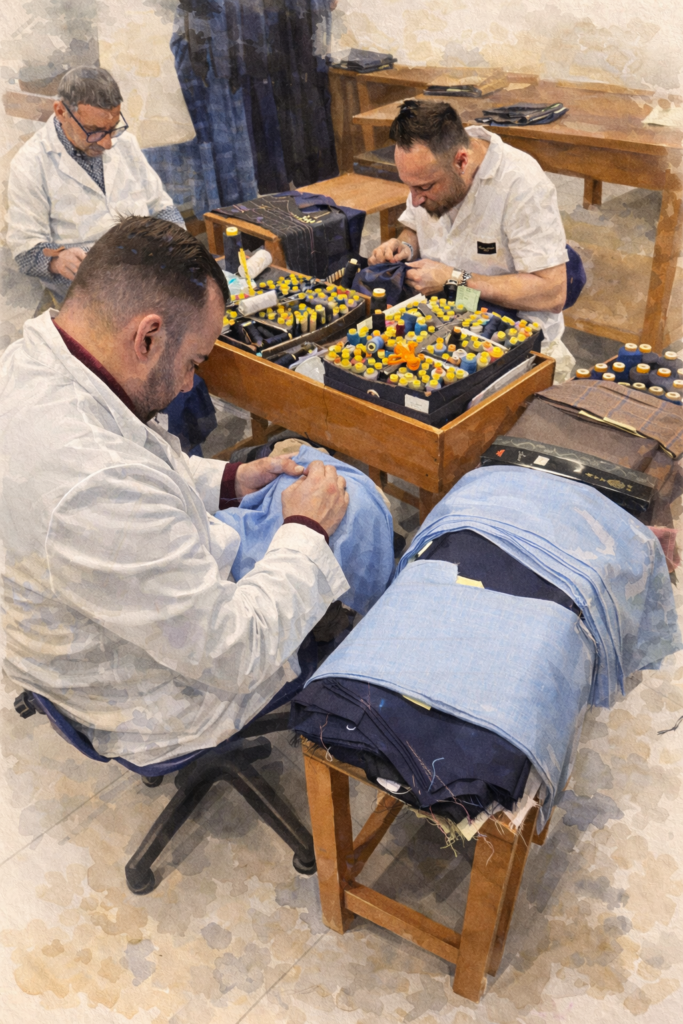
When we visit the tailoring workshops around Casalnuovo, and the surrounding communities, we see artisans pursuing the same objective that Hadid pursued in her architecture: creating maximum impact with remarkable restraint.
Like the steel ribs and glass surfaces that give Napoli Afragola its sense of openness, these makers construct garments that rely on intelligent engineering rather than unnecessary bulk. Layers are reduced. Canvas is softened. Shoulders are lightened. Every decision is made to create elegance through precision rather than weight.
This philosophy is embodied by many of the remarkable houses with whom we are proud to work. Most notably in our global exclusive model from Kiton, whose pursuit of lightweight construction and uncompromising quality has helped define modern luxury tailoring. Alongside Kiton, we are privileged to have been welcomed into the workshops of the artisans at Isaia, Cesare Attolini, Sartoria Pelliccia, Finamore, and more.
While each house has its own identity, they share a common heritage rooted in the Napoli region—a commitment to craftsmanship, handwork, and a uniquely Italian understanding of elegance.
This connection between architecture and craftsmanship is not accidental. Both disciplines depend upon an understanding of proportion, balance, and structure. Both require decades of experience to execute at the highest level. And both seek to create creations that feel timeless while remaining unmistakably modern.
What makes this connection especially meaningful is the community itself.
Many of the artisans we work with come from families that have practiced their craft for generations. Skills have been passed from parents to children, from master tailor to apprentice, over decades of dedicated work. Yet these workshops are not relics of the past. They continue to evolve, embracing new techniques and materials while preserving the knowledge that makes Italian craftsmanship unique.
Equally important, these are highly skilled professionals whose expertise is valued and respected. Ethical production is not a marketing concept for us; it is a fundamental principle. The craftspeople who create exceptional garments deserve fair compensation, dignified working conditions, and recognition for the extraordinary skill they bring to their work. We have visited and spoken with the craftspeople directly, as well as researched regional labor and compensation practices to ensure that buying a garment from us truly is supporting families here and in Italy.
Luxury should reflect excellence at every stage of creation.
That belief is embodied in both the station and the workshops that surround it.
Zaha Hadid envisioned Napoli Afragola as more than a place of transit. She imagined a structure that would connect people, encourage movement, and contribute to the future of the region. Today, it stands as a symbol of modern Southern Italy—forward-looking, ambitious, and deeply rooted in its community.
At Maxwell Studio, we find inspiration in that same balance between heritage and innovation.
The bright lines of the station, the openness of its design, and the sense of lightness it conveys remind us of the garments we seek out every season. Clothing that is sophisticated without being rigid. Luxurious without being ostentatious. Rooted in tradition while embracing modern life.
In many ways, the journey begins at Napoli Afragola. The trains arrive carrying visitors from across Italy and beyond. Nearby, generations of skilled artisans continue their work, shaping cloth with the same precision and purpose that shaped the station itself.
Whether creating a jacket for Kiton, crafting a shirt for Finamore or Borriello, cutting a coat at Cesare Attolini, building a bespoke suit at Sartoria Pelliccia, or contributing to the enduring legacy of Isaia, these artisans demonstrate that the finest luxury products are still created by human hands, guided by experience and pride.
Together, they tell a story about modern Italian excellence—one built on craftsmanship, integrity, ethical production, and the enduring beauty of lightness.